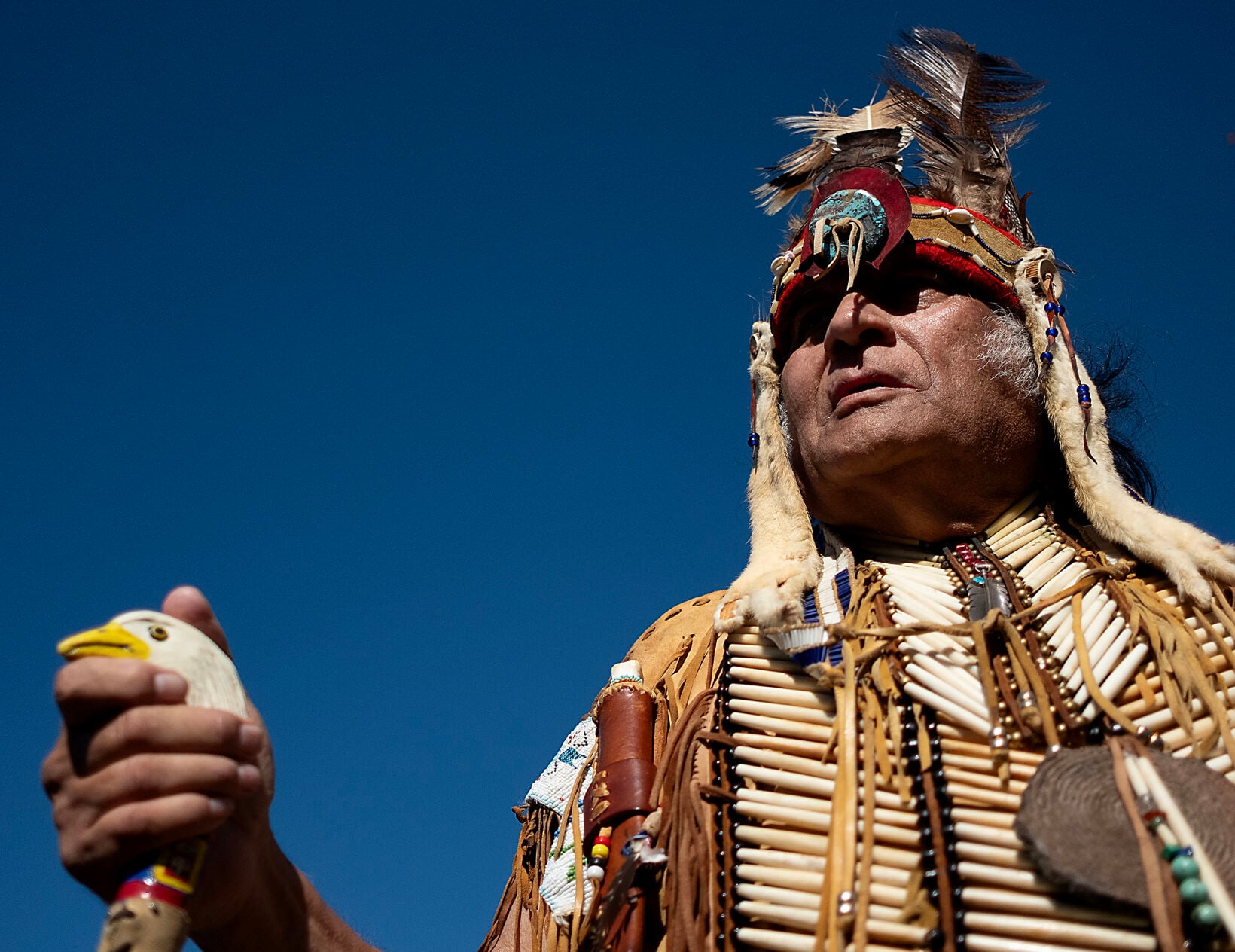
Chief Harold 'Buster' Hatcher in full regalia against the sky, eagle-head staff in hand
Waccamaw Indian People · 1992 – 2026 · thirty years

Thank you,
Chief.

On June 29, 2026, Chief Harold "Buster" Hatcher retired after three decades leading the tribe he founded — closing his letter to the People with "Thank you for allowing me to serve… I did my best for you."

This museum is the People's answer.
1521
First historical mention of the Waccamaw
1813
John Dimery buys back 300 acres — the Dimery Settlement
1935
Vander Hatcher sues Horry County over the Indian school
1988
Told "there are no Indians in South Carolina," Buster Hatcher sues the state — and wins
1992
The modern tribe is founded
2005
First state-recognized tribe in South Carolina
2016
The third constitution is ratified
2022
The federal recognition petition is filed
2026
Chief Hatcher retires; Chief Sievers-Cail succeeds
The unfinished fight

Support Waccamaw federal recognition

Chief Hatcher gave his life to one unfinished fight: the United States has still never recognized the Waccamaw Indian People. That gap keeps the tribe's sovereignty incomplete — and its ancestors on museum shelves. It now belongs to all of us.

2005State-recognized
Not yetFederally recognized
600+Ancestors still held

Donations are processed by Zeffy for the Waccamaw Indian People. Or contact your representatives and ask them to support Waccamaw federal recognition.

The Pillars

In His Own Words — Chief Hatcher

The chief's voice — from his memoir, recorded oral histories, broadcasts, and his last letter
What Harold 'Buster' Hatcher actually said — the boyhood, the war, the people, the fight, and the goodbye, in his own words.

The Tribe Today — Chief Cheryl Sievers-Cail

Pillar exhibit · the present tense — the Sievers-Cail administration, 2026 →
The story did not end with Chief Hatcher's retirement. On June 29, 2026 the chieftaincy passed to Cheryl Sievers-Cail — and the People carry on.

Photo Gallery — Chief Hatcher

A sourced photographic record, 1994–2026
The chief in photographs — every image sourced and credited.

The Dimery Settlement

Pillar exhibit · the origin place — Dog Bluff, Horry County, 1813 to today
Where the modern Waccamaw come from: 300 acres bought back in 1813, a farming community of families 'neither Black nor White,' its own church and school — and the Jim Crow schoolhouse fight that ran in the family blood.

The Long Fight — five generations

Pillar exhibit · 1813 · 1935 · 1988 · 2005 · 2022 — one family, one argument, two centuries
From John Dimery buying back his people's land to the federal petition: the same fight, five generations running.

Waccamaw: Past, Present, Future

The commissioned exhibit · Coastal Carolina University × the Waccamaw Indian People, 2021–2024
The award-winning CCU collaboration — a Horry County Museum exhibit, a 3-D walkthrough, oral histories, and an interpretive trail at the Tribal Grounds — that told the People's story from the deep past to the fight ahead.

Waccamaw Voices — recordings & film

Oral histories, television, and film — the People on tape, 2015–2026
The People in their own voices — oral-history interviews, preserved and transcribed.
The Halls · the People, their government, their web