Chief Harold 'Buster' Hatcher
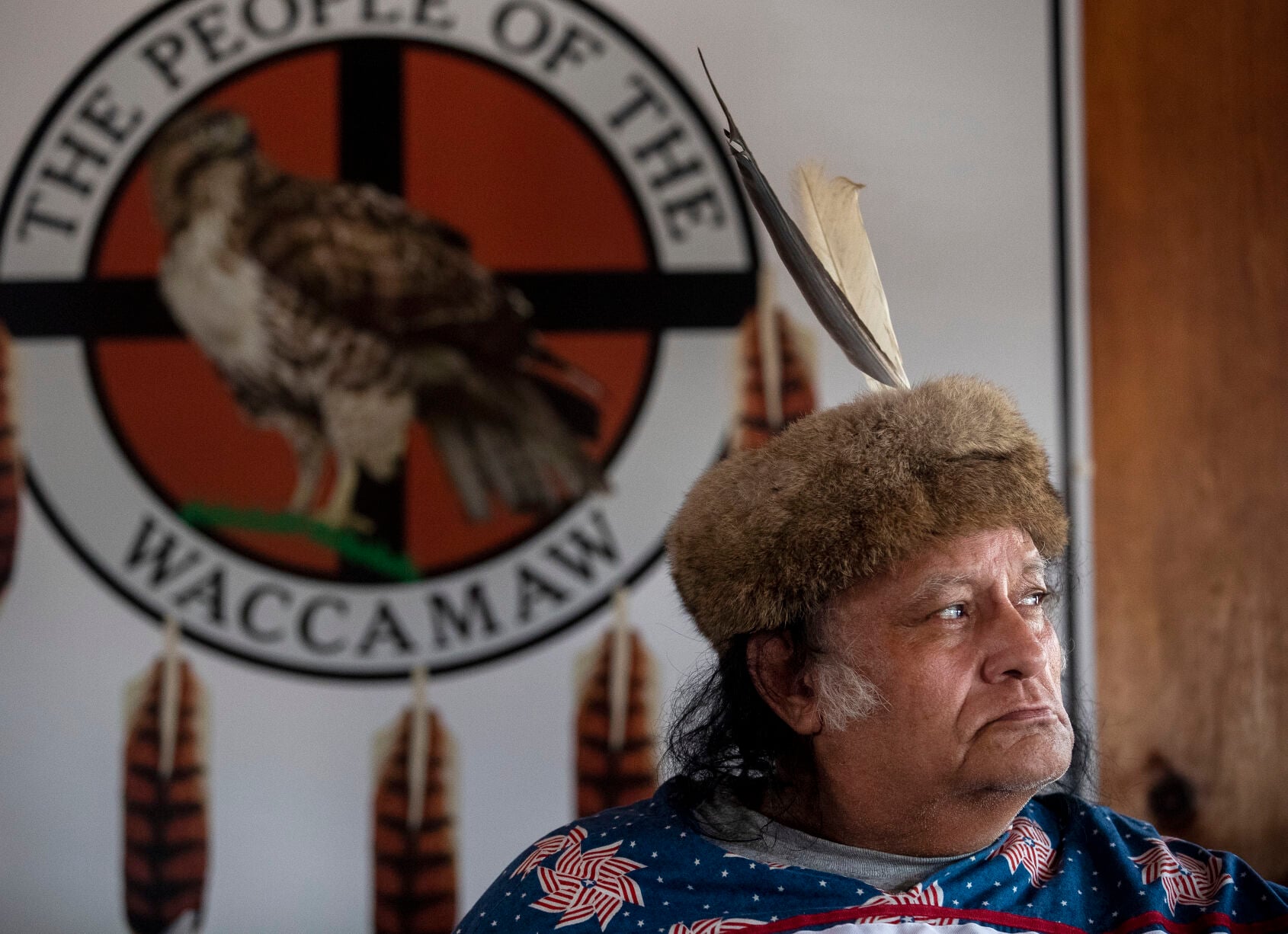
Harold “Buster” Hatcher founded the modern Waccamaw Indian People and led it for more than three decades — from a living-room organization to the first tribe recognized by the State of South Carolina. He was a Vietnam combat veteran and a retired Chief Warrant Officer; a businessman told his people did not exist; a plaintiff who sued the state and won; and, for thirty years, a chief. He retired on June 29, 2026, and holds the title “Chief” for life under tribal law.
This is his life as the record and his own words tell it.
The boy who belonged to neither
He grew up in and around Conway and Myrtle Beach in the segregated Horry County of the 1940s and 50s — a Waccamaw child in a world that had only two boxes, and no box for him.
“I was wrong at home because I wasn’t dark enough. I was wrong at school because I wasn’t white enough.”
In his own written memoir he kept the small cruelties whole: a teacher and a bar of soap; being told his water was “outside,” at the garden hose; an apple thrown at him in a diner with a slur; the lunchroom fight after which, he wrote, “I turned my book in and left the school for good.” He found peace only at Waccamaw Elementary in Conway — “a community school, and no one despised me there.”
The family’s fight was older than he was. In 1935, when the county folded the Indian school into the “colored” school, his grandfather Vander Hatcher brought the settlement’s children to the white school; they were turned away, and Vander sued Horry County. The county’s answer was to sort the children one by one, by the shade of their skin — “one of my uncles went to the black school, and his sister went to the white school. Same mother, same father.”
And there was the memory that became the thesis of his whole life. On a childhood trip to Cherokee, an older Cherokee woman in a store treated him as one of her own — “it made me feel like I’m home… I have a place to be now.” He would spend the rest of his life building that place for everyone else.
The soldier
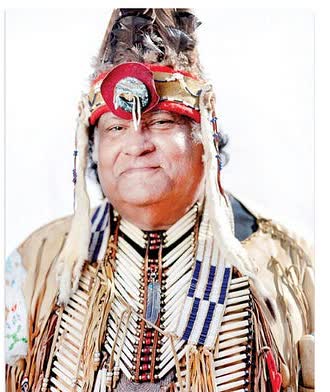
He enlisted in the U.S. Army in 1968, at eighteen, and served twenty years. He spent more than a decade with the 82nd Airborne Division; in Vietnam he was a machine gunner on an armored personnel carrier and a member of three-man tunnel-clearing teams. He was awarded the Bronze Star for pulling a wounded man out of a tunnel under fire, and was later wounded by a sniper on night guard duty. He rose from the enlisted ranks to a direct appointment as a warrant officer and retired a Chief Warrant Officer (WO‑3) in 1988 — his decorations including the Bronze Star, the Purple Heart, the Vietnamese Cross of Gallantry, and the Combat Infantryman Badge. His service is preserved, in his own hand and voice, in the Library of Congress Veterans History Project.
“Even though I’m a combat veteran from the Republic of Vietnam… I’ve got a Bronze Star, a Purple Heart, and a Vietnamese Cross of Gallantry. And I can’t practice the religion of my choice.”
“I was raised in the Army,” he would say of the way he led, “and all I know is Army Leadership.”
“There are no Indians in South Carolina”
Home from the Army, he bought a small company and went to register it as a minority-owned business — a company the family remembers as Diseco, named for his sister Dessie. A state office turned him down flat: there were, they told him, no Indians in South Carolina — to qualify, his people would have to be recognized.
“They told me we don’t have Indians in South Carolina, we got to be recognized… Everybody could register as a minority, just based on their birth certificate, but I couldn’t.”
That refusal lit a fight that lasted the rest of his life. He sued the state over it — “the state of South Carolina at that time said there were no Indians in South Carolina, so I ended up suing the state, and I won” — and in 1992 he chartered the modern Waccamaw Indian People and set out to make South Carolina admit what it had denied.
The long fight for recognition
From there his reach only grew. According to Coastal Carolina University, which would later award him an honorary doctorate, he chaired the National Coalition for Indian Equality — a body of more than four hundred Native groups and tribes — and in 1994 briefed President Bill Clinton on the plight of non-federal Indians, winning relief in federal law. He was a founding member of South Carolina’s Indian Affairs Commission and worked “with every governor from Carroll Campbell on down.”
He changed the law itself. He helped pass the 2008 South Carolina statute that let a Native chief perform a legal marriage — and he and his wife became, he said, “the first, the first in history, to be married by an Indian chief, legally, in the state of South Carolina.” He persuaded the Myrtle Beach City Council to trade Columbus Day for Indigenous Peoples’ Day: “every Columbus Day now I get a plaque saying it’s now Indigenous People’s Day.”
“We don’t ask for anything better, but we think we should at least get the same.”
“Something more than Other”
For generations, a Waccamaw filling out an official form found only one box that fit: Other. Around the turn of the millennium — as the U.S. Census for the first time let a person claim more than one race, and as the tribe pressed its case — that indignity began to lift. To be recorded, by name, as who you are was its own quiet victory, and the line he drew from it is the one his family still repeats:
“Finally, we can be something more than Other.”
First in South Carolina
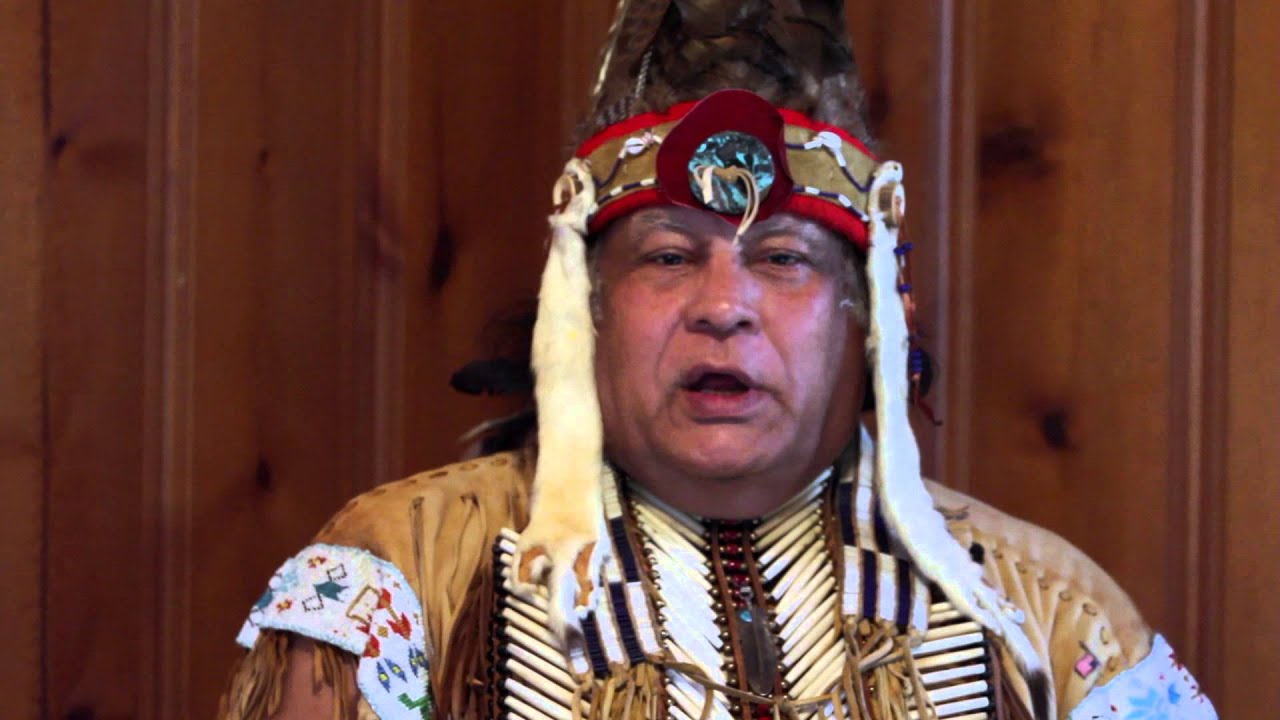
On February 17, 2005, before the South Carolina Commission for Minority Affairs, the Waccamaw Indian People became the first tribe recognized by the State of South Carolina — the work, he said, of “twenty-something years.” Tribal Council made February 17 a tribal holiday.
State recognition is not federal recognition, and he never let anyone confuse the two. The tribe is state-recognized, not federally recognized; a federal recognition petition filed in 2022 remains pending, and the Catawba Indian Nation is still the only federally recognized tribe in South Carolina. That distinction has a human cost he named again and again — most of all the more than 600 sets of ancestral remains held on museum shelves in the state, which the tribe cannot bring home because it is not federal.
“We have a lot of our people on museum shelves… The federal government owns them, and they won’t work with us because we’re not federal.”
The chief (1992–2026)
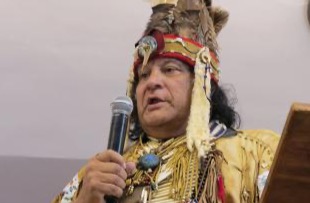
Under his chieftaincy the tribe wrote three constitutions (2000, 2008/09, and the 2016 charter still in force), built a government of three branches, seated its judges and constables, and acquired the tribal grounds at the Dog Bluff community near Aynor. It made Waccamaw Day and the year-round Pauwau into institutions and filed its federal recognition petition (2022). The office was not his without interruption — it passed through other hands in 2006–2008 (West, Webb, Hayes) before his restoration in 2009 — but across three decades the tribe was, unmistakably, his life’s work.
The honors came late and were real: a 2018 Jefferson Award for service to the American Indian community; an honorary Doctor of Humane Letters from Coastal Carolina University (2023); and the permanent place his military service holds in the Library of Congress. (In His Own Words · The Long Fight · Waccamaw Voices)
“Thank you for allowing me to serve”
On June 29, 2026, in a letter to the People, he resigned as Chief, having “led the tribe for about 30 years.” It was a planned handoff, not a rupture — he had stepped back over his final year to let his Vice Chief lead — so that under Article VII of the constitution the office passed cleanly to Chief Cheryl Cail, with his blessing. Under Resolution SH-08-04-2006-01, he keeps the title for life — “with privilege but without authority” — and signs “Chief Retired.” The tribe he built carried on without a stumble. → The tribe today
“Thank you for allowing me to serve… I did my best for you.”